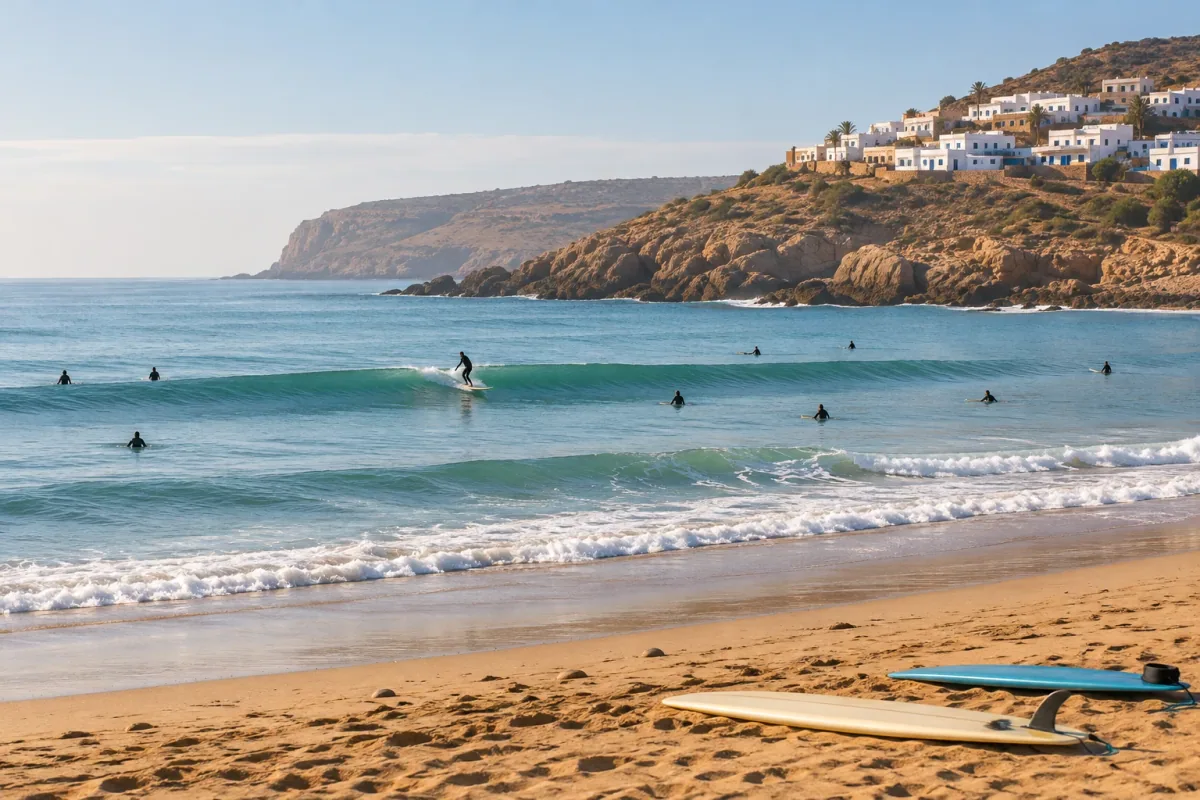
Tamraght and Taghazout are great places to learn to surf, as long as you start on the sandy beach breaks and leave the famous point breaks to experienced surfers. The best beginner spots are Devil’s Rock, Banana Beach and Crocro in Tamraght, Taghazout’s main beach, and Anza and Agadir beach a little further south. Come between autumn and spring, take lessons with a licensed school, and surf as many days in a row as you can.
This guide explains where to surf at each stage, when to come, what to wear in the water, and how to choose lessons.
Why this coast works for beginners
The stretch of coast from Agadir to Taghazout faces the open Atlantic, so it gets swell most of the year. What makes it special for learners is the mix: within a few kilometers you have soft sandy beaches with gentle white water, slightly bigger beach peaks for improvers, and some of Morocco’s best-known point breaks for when you are ready. Surf schools move between spots depending on the swell, tide and wind, so beginners can usually find a suitable wave somewhere.
The best beginner surf spots
| Spot | Where | Wave | Best for |
|---|---|---|---|
| Banana Beach | Tamraght | Mellow, often mushy beach break | First lessons on small days |
| Devil’s Rock | North of the Tamraght headland | Sandy beach break with A-frame peaks | Learners and improvers |
| Crocro (Crocodiles) | In front of Tamraght | Lefts and rights over sand, some closeouts | Learners, with a school |
| Taghazout main beach | Taghazout village | Small, protected beach break | Complete beginners |
| Panorama | South edge of Taghazout | Right-hand point plus sandy beach breaks | Learners on the inside, improvers on the point |
| Anza | About 5 km north of Agadir | Consistent sandy beach break, mostly rights | Beginners on a course and better surfers |
| Agadir beach | Agadir city | Sheltered, mellow beach break | Beginners when it works |
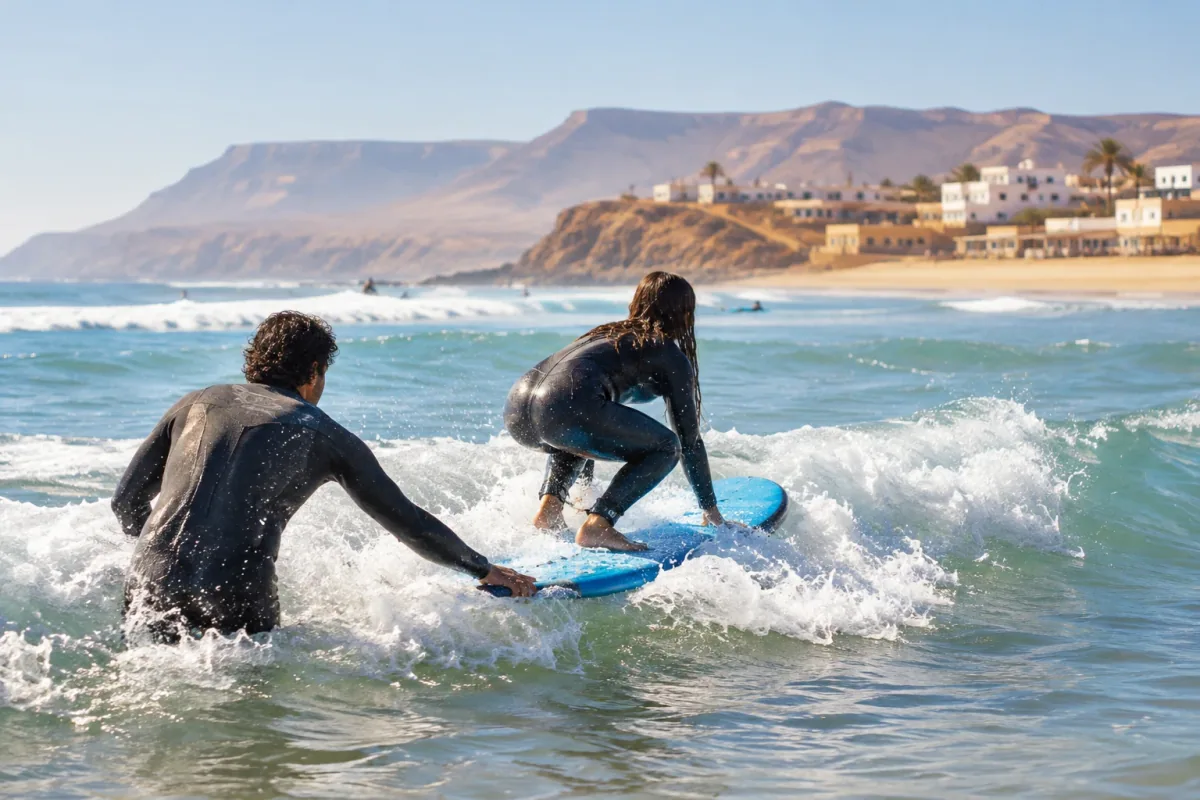
Two things matter more than the name of the spot: the size of the swell on the day and the tide. A beach that is perfect at mid tide can close out at low tide or turn too powerful on a big swell. Ask your instructor or a local surf shop every morning.
If you are staying in Tamraght, Devil’s Rock and Banana Beach are within walking distance of most of the village. See our guide to things to do in Tamraght for the rest of your day.
Spots beginners should not surf
Some of the area’s most famous waves are dangerous for learners:
- Anchor Point: a long right-hand point north of Taghazout that fires in winter. Advanced surfers only.
- Killers: a powerful, barreling wave. Experts only.
- 14km: steep, hard-breaking waves over rocks between Tamraght and Taghazout, with a strong local crowd.
- K11 and the other reefs: a left-hand reef toward Aourir that works on higher tides, with a busy local line-up.
Paddling out at these spots before you can control your board puts you and other surfers at risk. Watch from the cliffs instead: it is one of the best free shows on the coast.
When to come: surf season month by month
October to April is the main season. Northwest swells arrive regularly and the point breaks come alive. December to March is the most consistent period, but big winter days bring strong currents and powerful waves that are not for beginners. Calm days in between are excellent for learning.
April to June and September to November are often the sweet spot for beginners: gentler waves, warmer water and fewer big swells.
July and August bring small waves, sometimes flat days, frequent wind and busy beaches with domestic holidaymakers. Good for first-timers and longboarders, less so for anyone wanting to progress fast.
Book early for European school holidays, when Taghazout fills up.
Water temperature and what wetsuit to bring
Average sea temperatures in Taghazout, based on the last 10 years of data:
| Months | Average water temperature |
|---|---|
| January to March | 16.5–17.1°C (62–63°F) |
| April to June | 17.4–19.1°C (63–66°F) |
| July to October | 20.1–20.6°C (68–69°F) |
| November and December | 17.8–18.6°C (64–66°F) |
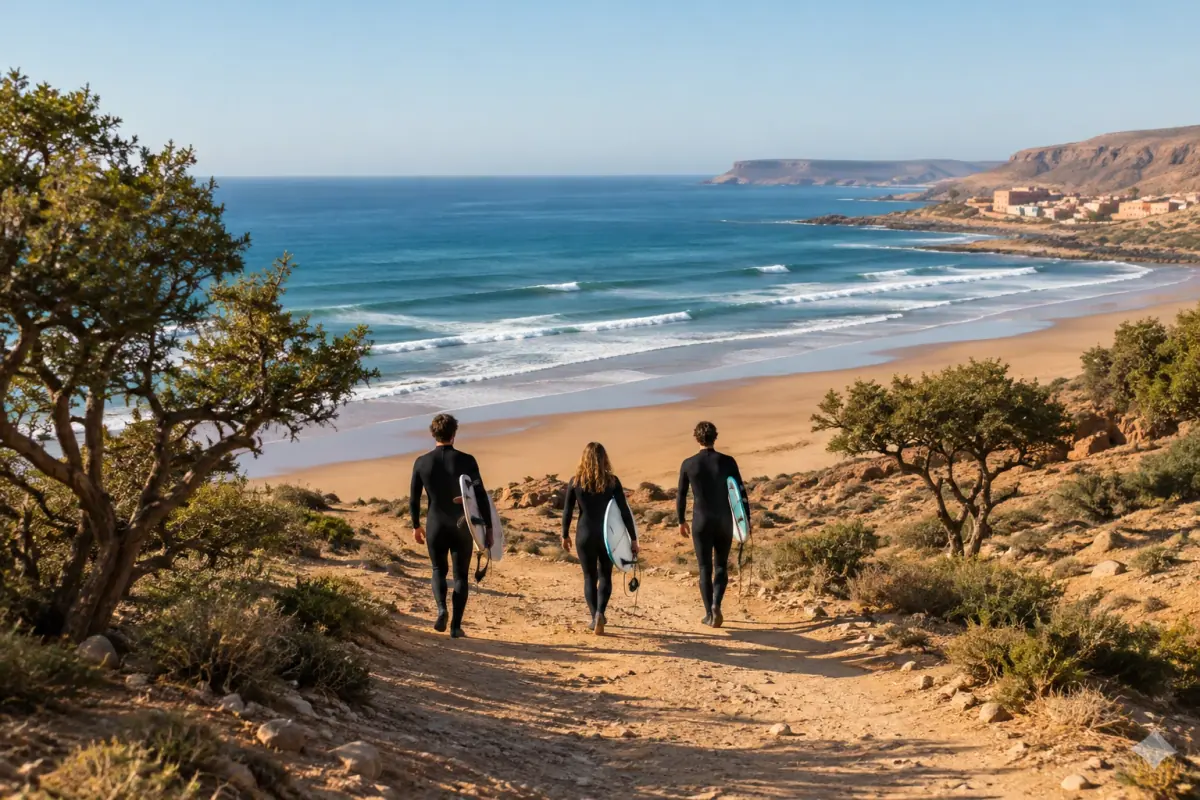
A 3/2 full wetsuit is enough for most of the year. In midwinter, a 4/3 keeps you warmer through long sessions. Surf schools usually include a wetsuit in lessons, so you only need your own if you plan to surf independently.
How to choose surf lessons
A good school makes a huge difference to your first week. Look for:
- Small groups. Some schools cap groups at around six students per instructor. Smaller groups mean more feedback.
- Licensed, experienced instructors who explain safety, currents and etiquette on the beach before you paddle out.
- Transport to the right spot. The best schools drive to whichever beach suits the day, not the same beach every time.
- What’s included. Board, wetsuit, theory, transport, lunch, photos or video analysis: compare packages, not just the headline price.
- Multi-day packages. Learning is about repetition. Five days in a row will teach you far more than five lessons spread over a month.
Most schools teach children from around six years old, and many surf houses combine lessons with yoga.
A simple plan for your first surf week
Every school has its own program, but a typical first week on this coast looks something like this:
- Days 1–2: white water. Learn to paddle, pop up and ride broken waves straight toward the beach on a big soft-top, usually at Banana Beach, Crocro or Taghazout’s main beach.
- Days 3–4: first green waves. With an instructor pushing you into small unbroken waves, you start angling left and right along the face. Devil’s Rock and the inside of Panorama are common classrooms.
- Day 5 and beyond: reading the ocean. Choosing your own waves, paddling out through the white water, and learning where to sit. Some schools move improvers to Anza or other beach breaks depending on the swell.
- A rest day when it’s flat or huge. Use it for a hammam, a walk along the coast or a trip to Paradise Valley. Your shoulders will thank you.
Expect to be tired and a little sore after the first two days. That is normal, and it is the best reason to book a few extra days.
What to pack for surfing here
- Sun protection: high-factor sunscreen, a lycra or rash vest, a cap and sunglasses for the beach.
- A towel or poncho for changing on the beach, and flip-flops for the walk down.
- A small dry bag for your phone and keys, since many beaches have no lockers.
- A warm layer for after your session from November to March, when mornings and evenings are cool.
- Your own wetsuit only if you surf independently. Lessons usually include one, and rentals are easy to find.
Staying safe in the water
- Surf within your level and stay away from rocks and piers.
- Many beaches have little or no lifeguard cover, and warning signs may be limited, so never surf alone.
- Rip currents are common, especially in winter swells. If one pulls you out, stay calm and paddle parallel to the beach until you are free of it.
- Sun: the Moroccan sun is strong year-round. Use reef-safe sunscreen and a surf hat or lycra in the middle of the day.
- Respect the line-up: don’t drop in on someone already riding a wave, and don’t let go of your board near other surfers.
Planning your surf trip
The ideal setup for a beginner is a base within walking distance of the beginner beaches, a week or two of lessons, and a few spare days for when the swell is too big or too small. Tamraght gives you exactly that, with Taghazout’s points nearby once you progress. If you are arriving by plane, read how to get from Agadir airport to Taghazout and Tamraght.
Tip: surf early. Mornings are usually calmer, less windy and less crowded than afternoons, especially from spring to autumn.