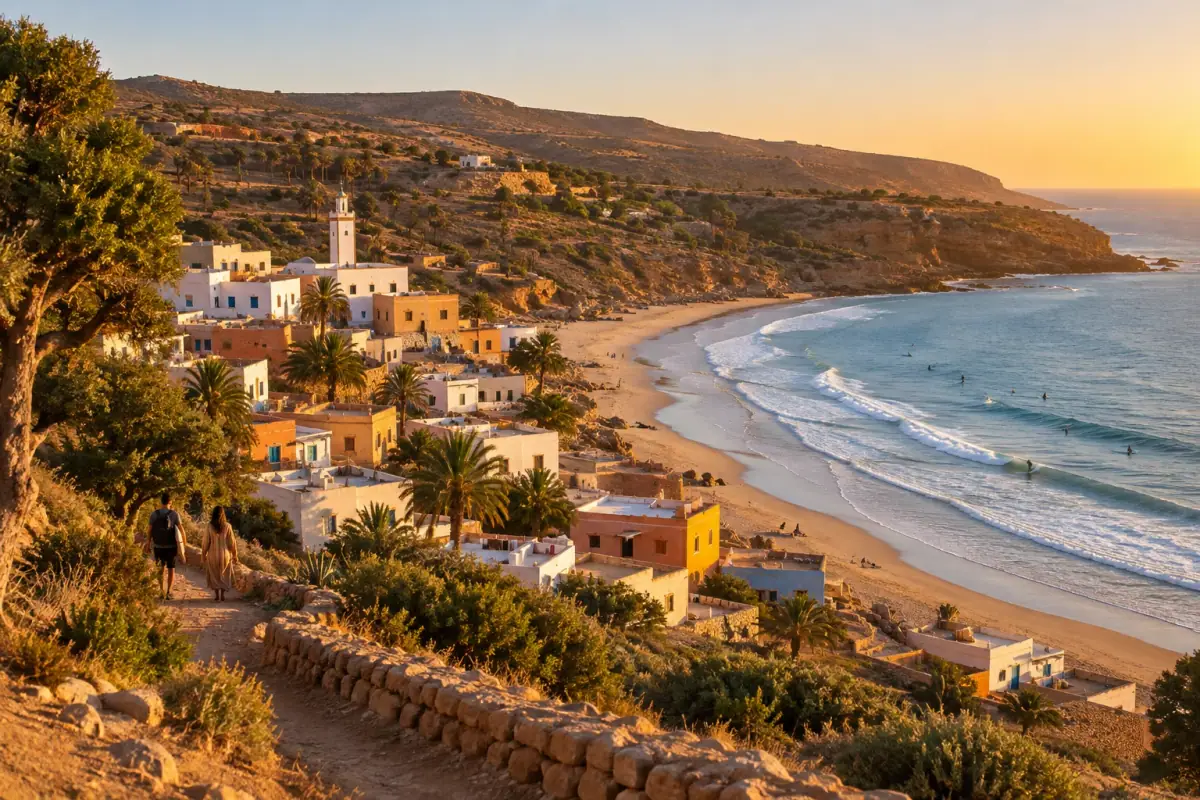
The best things to do in Tamraght are learning to surf on its sandy beach breaks, walking the coast to Taghazout, shopping the Tuesday souk and taking a half-day trip to Paradise Valley. Tamraght is a small Amazigh village on the coast road about 16 km (10 miles) north of Agadir, and it has become a base for surfers, yoga travelers and remote workers who want the ocean without the busier feel of Taghazout next door.
This guide covers what to do in and around the village, how long to stay, how to get around, and a few local habits worth knowing before you arrive.
Where is Tamraght, and what is it like?
Tamraght sits between Aourir to the south and Taghazout to the north, on the N1 coast road. Agadir is roughly 30 to 50 minutes away by car depending on traffic, and Taghazout is about 10 minutes by taxi. Agadir Al Massira Airport is the closest airport.
The village has two sides. The old village climbs the hill inland, with narrow streets, the main mosque and the weekly souk. The newer part runs along the main road and the beaches, where you find surf shops, cafés, surf houses and small grocery stores. It is relaxed rather than polished: expect construction, stray cats and dogs, and roosters at dawn alongside ocean views and mint tea.
If you are flying in, our guide to getting from Agadir airport to Taghazout and Tamraght compares taxis, buses and transfers.
Surf at Devil’s Rock, Banana Beach and Crocro
Surfing is the main reason most people come, and Tamraght is one of the friendliest places on this coast to start.
- Devil’s Rock: a sandy beach running north from the Tamraght headland, with A-frame peaks that suit learners and improvers. On calm days it is also the best spot in the village for a swim.
- Banana Beach: a mellow, often mushy beach break that works well for complete beginners on small days.
- Crocro (Crocodiles): a beach break in front of the village with lefts, rights and some closeouts. Surf schools use it often.
- Banana Point: a right-hand point in Tamraght Bay. The take-off is harder than on the beaches, so treat it as a next step once you can turn and read waves.
The main season runs from about November to March, when Atlantic swells arrive most consistently. Summer is smaller and often very windy. Breaks such as 14km (on the rocks north of the main beach) and K11 (a left-hand reef toward Aourir) are steeper, rockier and full of local surfers, so leave them to experienced riders.
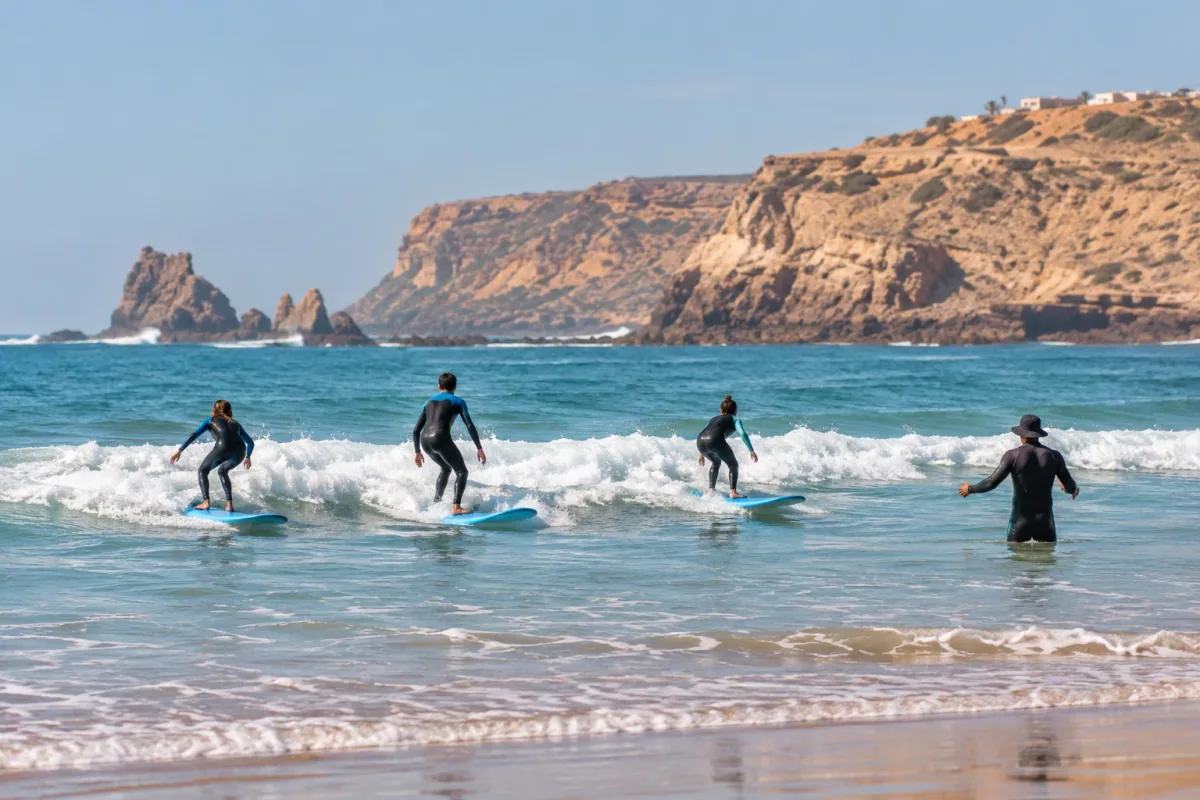
For spots, seasons, wetsuits and lessons in more detail, read our beginner’s guide to surfing in Tamraght and Taghazout.
Surf within your level. Many beaches have little or no lifeguard cover, and winter swells bring strong currents. If you are learning, go with a licensed surf school.
Walk the coast to Taghazout
One of the simplest pleasures here is walking north along the coast toward Taghazout Bay. Coastal paths and the seafront promenade connect Tamraght with its neighbors, and the walk passes beaches, surf breaks and plenty of places to stop for tea. Go in the morning or late afternoon: midday sun is strong for most of the year, and there is little shade.
Once in Taghazout, wander the main street, watch the fishing boats come in, and stay for sunset. The skatepark on the hill above Taghazout is one of the best sunset viewpoints in the area, but you need a taxi or a lift to reach it. A taxi back to Tamraght costs about 50 MAD (≈ $5) as of late 2025.
Shop the Tuesday souk and Aourir’s banana stalls
Tamraght souk takes place every Tuesday in the old village, behind the main mosque. It is a working market for locals, not a craft bazaar: fruit, vegetables, spices, olives, household goods and second-hand clothes. Bring small notes and coins, and go in the morning when it is busiest.
Aourir, the next village south, is known for the banana stalls along its main road and has its own market on Wednesdays, with produce, spices, dates, olives and some handicrafts. It is a short taxi or bus ride away.
For the region’s biggest market, head to Souk El Had in Agadir. It is huge and covers everything from produce to leather and ceramics. Prices for souvenirs are usually open to bargaining, so agree on a price before you pay.
Spend a day in Paradise Valley
Paradise Valley is a palm-lined gorge of the Tamraght river in the foothills of the High Atlas, about 25 km north of Agadir. To reach it, drive up the N1 toward Tamraght and Aourir, turn inland at the roundabout and follow the road through Tamzargout to the car park. From there, an easy walk of around 30 minutes leads to natural pools surrounded by red rock, argan trees and palms.
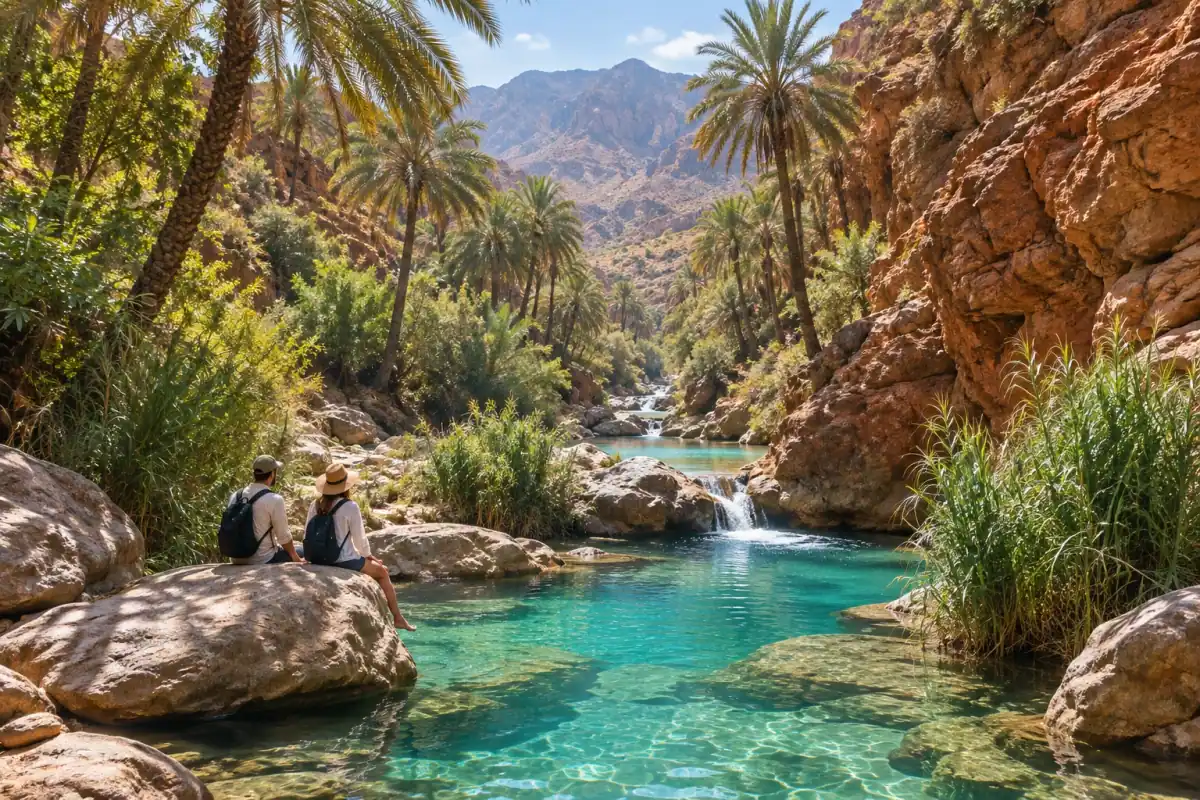
A few practical points:
- No public transport goes there. Rent a car, take a taxi for the day, or join a trip organized by a surf house or tour operator.
- Pools are fullest in late winter and spring. In summer, go early in the day to avoid the heat and the crowds.
- Check the water before jumping. Cliff jumping is popular, and accidents have happened when water levels were low. Open water can hide rocks and steep drops.
- Eat at the valley. Simple pop-up spots serve tagines and fresh orange juice. Order your tagine when you arrive so it is ready after your swim.
If you have a car, you can continue up the mountain road to Imouzzer des Ida Outanane, a village at about 1,250 m known for its waterfalls (best from January to March) and a Thursday souk.
Yoga, cooking classes and a hammam
Tamraght has a growing wellness scene, much of it run by surf houses and small studios:
- Yoga: drop-in classes and surf-and-yoga packages are easy to find, often on rooftops with ocean views.
- Cooking classes: learn to make tagine, couscous and Moroccan salads, usually with a trip to buy ingredients.
- Hammam and spa: a traditional scrub and steam is the best way to recover after a few days of surfing.
Ask at the place you are staying for current schedules and prices, since classes change with the season.
How to get around Tamraght
| Option | Route | Price (2025–2026 sources) | Good to know |
|---|---|---|---|
| City bus 32 or 33 | Agadir, Tamraght, Taghazout | 7–10 MAD (≈ $1) | Every 15–30 minutes from about 6 am to 9–10 pm. Pay the driver in cash. |
| Shared grand taxi | Agadir or Inezgane to Taghazout | 20–30 MAD per seat | Leaves when full. Confirm the price before you get in. |
| Private taxi | Tamraght to Taghazout | About 50 MAD | Agree on the fare first. Cash only. |
| Rental car | Anywhere, including Paradise Valley | About 125–150 MAD per day | You need your license and usually an International Driving Permit. |
Uber and Bolt are not a reliable option here. Petit taxis (the small red ones) stay within Agadir’s city limits, so for trips between villages use buses, grand taxis or a car.
Local tips before you go
- Dress: swimwear is normal on the beach, but cover shoulders and knees in the old village, at the souk and in Agadir’s neighborhoods. It is respectful and you will get less unwanted attention.
- Cash: small shops, buses, taxis and the souk run on cash in dirhams.
- Animals: many street cats and dogs live in the village. Local animal charities welcome donations and volunteers.
- Safety: petty theft happens in busy tourist areas and on beaches, so don’t leave phones and bags unattended while you surf. Check your own government’s travel advice before you go.
How long to stay in Tamraght
Three days is enough to see the village, take a couple of surf lessons, catch a sunset in Taghazout and spend half a day in Paradise Valley. If you want to actually learn to surf, plan a week or more: progress comes from surfing many days in a row, not from one lesson.
Tamraght also works well as a base for the whole coast, from Agadir’s beach and souk to Imsouane further north. We’re building our hostel in Tamraght for exactly that kind of trip.
Tip: pack a light long-sleeve layer and a headlamp. Evenings by the ocean get cool, and some streets in the old village are dark at night.